"Illuminating language processing by leveraging linguistic diversity"
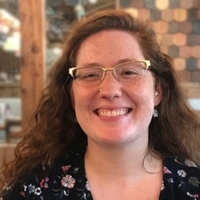
Rescheduled: A Linguistics Research Colloquium presentation by Samantha Wray, Lecturer in Linguistics, Cognitive Science, and Psychological and Brain Sciences, Dartmouth College
Title: Illuminating language processing by leveraging linguistic diversity
Abstract:
A wealth of research has sought to explain how our minds and brains perform common (but nonetheless complex) tasks, such as parsing a word into its constituent meaning-contributing pieces, or morphemes. Modern computational approaches have begun to elucidate this process by pinpointing individual contributions of meaning, form and peculiarities of modality (written/spoken). However, the work behind both the new and older, seminal models is often informed by only a handful of language families with a limited array of linguistic features, leaving the particulars of how language is processed incomplete.
This talk focuses on how psycholinguistic and neurolinguistic research can utilize targeted manipulations of experiment design in combination with linguistic properties of understudied languages to expand our current models of language processing. I present my work in both visual and auditory linguistic processing on understudied languages, including non-standard varieties of Arabic and Filipino/Tagalog. I show that models based on English which prioritize word edges and posit isolable stages for morpheme combination fail when applied to languages with noncontiguous morphemes, and consider alternative models.
The talk will be followed by a reception with refreshments.